Desktop Flows
How RPA can elevate your small business
Repetitive manual work is costing your small business more than you think. Discover how Robotic Process Automation (RPA) can free your team from busywork and help you scale smarter.
Introduction
Running a small business is one of the most demanding things a person can do. Between managing clients, chasing invoices, handling data entry, and keeping operations moving, there are never enough hours in the day. Most small business owners don't have a lack of ambition, they have a lack of time.
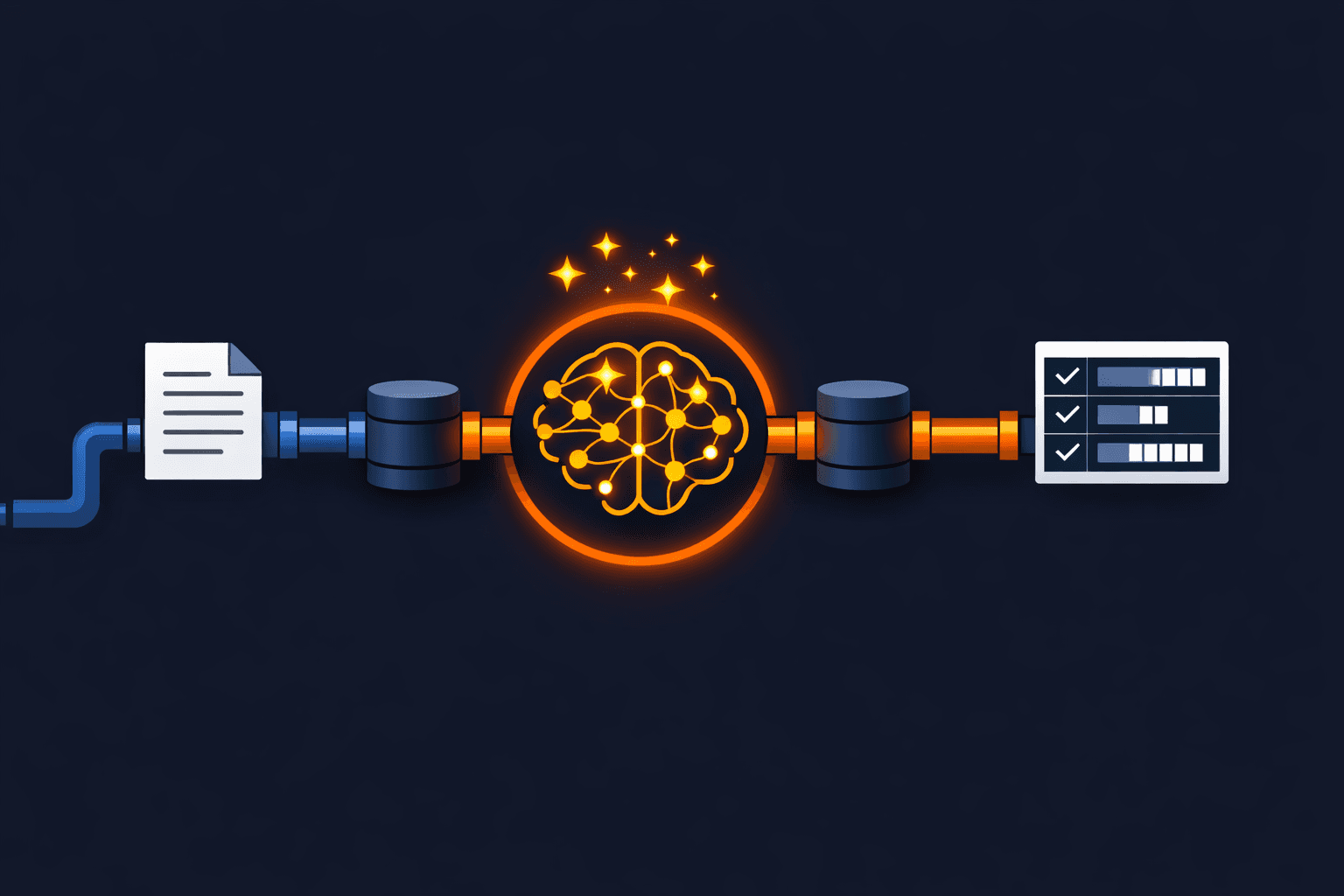
Robotic Process Automation, or RPA, is changing that equation. RPA uses software "bots" to mimic repetitive human actions on a computer (clicking, copying, pasting, form-filling, sending emails) and executes them faster, around the clock, without errors. What once took a team member an entire afternoon can now run in minutes while your team focuses on work that actually requires a human.
RPA isn't just for large corporations anymore. Modern platforms have made it accessible, affordable, and practical for businesses of any size. If your team is spending hours on tasks that follow a predictable pattern, there's a strong chance RPA can handle them.
The challenge
Most small business owners underestimate how much repetitive manual work is quietly draining their resources. It's not just the time, it's the compounding cost of errors, delays, and burnout.
Consider a typical week in a small business:
Data entry: Copying information between spreadsheets, CRMs, and accounting tools
Invoice processing: Manually generating, sending, and tracking invoices
Report generation: Pulling numbers from multiple sources to compile weekly reports
Order management: Updating stock levels, confirming orders, notifying customers
Email follow-ups: Sending templated communications at the right time
Each of these tasks is low-complexity but high-frequency. And because they're tedious, they're also error-prone. A mistyped figure in an invoice, a missed follow-up email, a delayed report can add up and erode trust, revenue, and team morale.
The real challenge is that small business owners often accept this friction as simply "part of running a business." It isn't. It's a solved problem and the solution is automation.
What is RPA, exactly?
RPA stands for Robotic Process Automation. Despite the name, there are no physical robots involved. An RPA bot is a piece of software that operates your existing applications exactly as a human would, but at machine speed.
Unlike custom software development, RPA works on top of the systems you already use. You don't need to replace your tools or overhaul your infrastructure. The bot integrates with what's already there.
There are two primary types relevant to small businesses:
Desktop automation: Bots that run on a local machine, automating tasks in desktop applications like Excel, Outlook, and ERP systems
Cloud flows: Automations that connect cloud services (like Gmail, Shopify, Xero, or Google Sheets) and trigger actions based on events
Together, these cover the vast majority of repetitive workflows in a typical small business.
Areas where RPA makes an impact
Finance and invoicing
RPA can automatically generate invoices based on completed orders, send them to clients, log payments in your accounting software, and flag overdue accounts, all without human involvement. Cash flow visibility improves and chasing payments becomes the exception, not the norm.
Customer communications
Follow-up emails, order confirmations, appointment reminders, and support ticket updates can all be triggered automatically based on actions in your CRM or e-commerce platform. Your customers get timely, consistent communication while your team stays focused on higher-value interactions.
Data entry and synchronization
If your team regularly copies data from one system to another, for example from a form into a spreadsheet or from an email into a CRM, RPA eliminates that entirely. Bots run the sync on schedule or in real time.
Reporting and dashboards
Weekly business reports that require pulling data from multiple sources can be automated end-to-end. The bot collects the data, structures it, and delivers a finished report to the right people on time, every time.
Onboarding and admin workflows
New employee or new client onboarding involves a predictable sequence of steps: sending documents, creating accounts, setting up access, sending welcome emails. RPA can orchestrate this entire flow automatically the moment a trigger fires, such as a signed contract arriving in your inbox.
Real results, not just theory
The impact of RPA is most visible in time recovered and errors eliminated. Businesses that implement automation in even one or two core workflows typically report:
50–80% reduction in time spent on automated tasks
Near-zero error rates in data handling
Faster turnaround times for client-facing processes
Better team morale as staff shift away from dull, repetitive work
For a small team, recovering even 10 hours per week across the business is transformative. That's time redirected toward growth, client relationships, product improvement, or simply breathing room.
Is RPA right for your business?
RPA delivers the highest return when applied to processes that are:
Rule-based: They follow a consistent, predictable logic
High-frequency: They happen daily, weekly, or multiple times per day
Digital: They happen entirely on a computer
Time-sensitive: Delays in these tasks cause downstream problems
If you can describe a workflow as "if X happens, do Y, then do Z," it's almost certainly automatable. If you find yourself saying "we have someone whose whole job is basically just doing this," that's your clearest signal.
You don't have to automate everything at once
The most effective approach to RPA for small businesses is to start narrow and expand. Pick one high-frequency, low-complexity process, such as invoicing or data entry, and automate that first. Measure the time saved, observe the reduction in errors, and let the results build the case for the next workflow.
Working with an automation consultant can accelerate this significantly. An experienced eye can identify automation opportunities you've stopped noticing because they've become background noise in your operations. They can also build and deploy bots quickly, so you see results in days rather than months.
Conclusion
The businesses that scale efficiently aren't necessarily the ones with the most people or the biggest budgets. They're the ones that build smart systems. RPA is one of the most powerful tools available for doing exactly that, and it's no longer out of reach for small businesses.
If your team is spending hours on work a bot could do in minutes, that time has a cost. The question isn't whether automation makes sense for your business. It's which process you'll start with.
"Automation isn't about doing more with AI or more with RPA. It's about matching the tool to the task, every single time."

